AI+X Summit Zurich: Where Innovation Meets Real-World AI Applications
AI+X Summit Zurich: Where Innovation Meets Real-World AI Applications
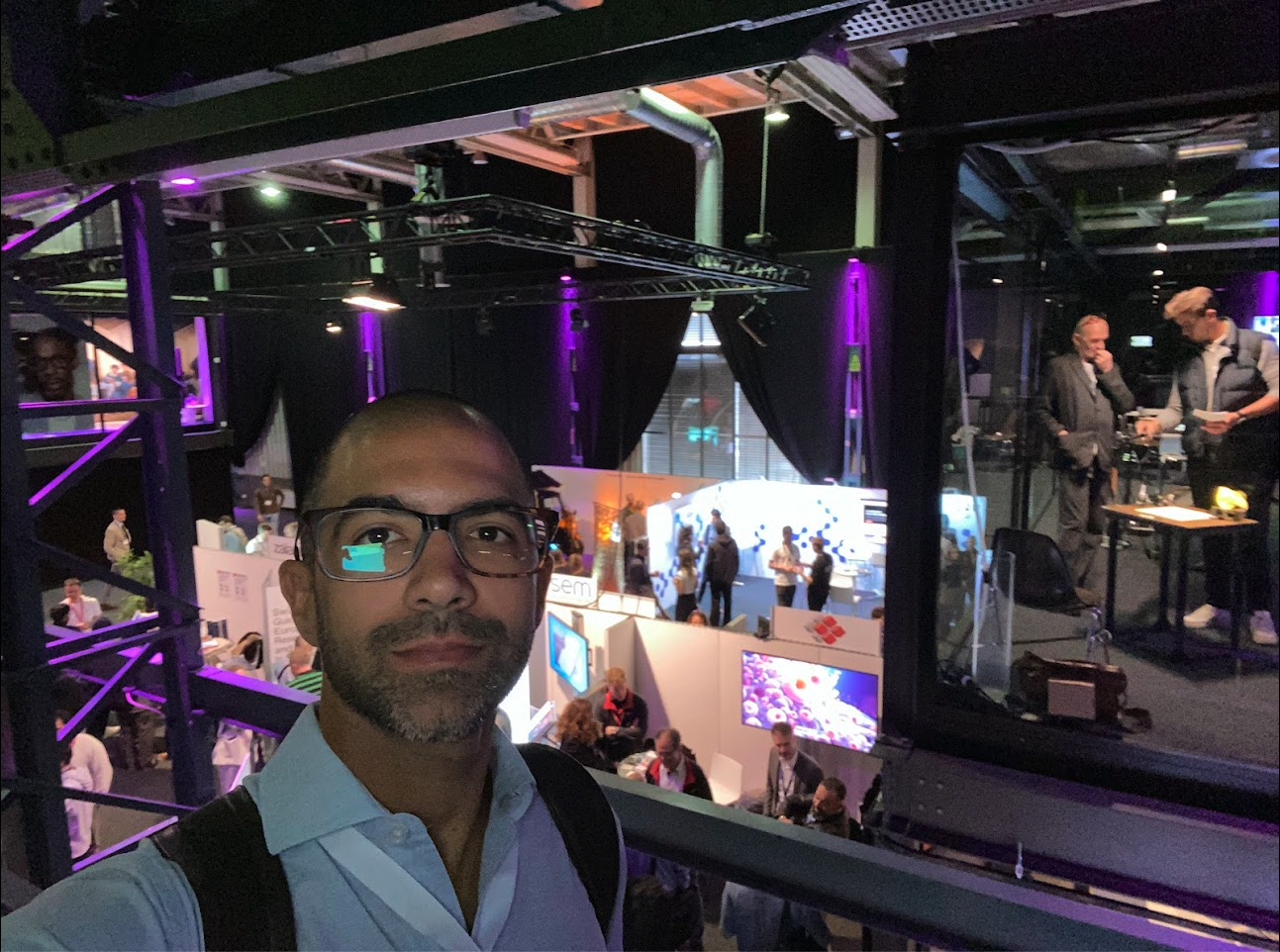
Last week, I attended the AI+X Summit at StageOne Oerlikon in Zurich—a vibrant gathering of innovators, startups, and VCs exploring the cutting edge of AI applications across industries. As I continue to explore the Swiss AI ecosystem for potential opportunities, this conference provided fascinating insights into how AI is being applied to solve real-world challenges in unexpected ways.
Standout Innovations: When AI Meets Nature and Neuroscience
Among the many startups showcasing their projects, two particularly captured my attention for their unique approaches to applying AI in exciting domains.
Synature: Listening to Ecosystem Health
Synature is doing something remarkable—using AI to capture and analyze sounds in nature to assess ecosystem health. In an era where biodiversity monitoring is crucial for understanding climate impact, their approach offers a non-invasive, scalable solution to track environmental changes. Imagine being able to quantify the health of a forest or wetland simply by listening to its soundscape. This kind of innovation shows how AI can serve as a bridge between technology and environmental conservation.
Optohive: Democratizing Brain Imaging
Optohive showcased their high-precision, user-friendly Near-Infrared Spectroscopy (NIRS) brain imaging solution. What struck me about their approach is the focus on accessibility—making advanced brain imaging technology that’s typically confined to research labs available for broader applications. This could revolutionize everything from cognitive assessment to brain-computer interfaces, opening new frontiers in understanding human cognition and behavior.
Disney’s Emotional Robots: When Engineering Meets Art
One of the conference highlights was Disney’s presentation on using deep reinforcement learning to train robots to move with emotion.
Watching their robots express joy, surprise, or anger through movement alone was a powerful demonstration of how AI can bridge the gap between technical precision and artistic expression.
This isn't just about entertainment—it's about creating more intuitive human-robot interactions. As we move toward a future with more robotics in healthcare, education, and service industries, the ability for robots to communicate through body language could be transformative for user acceptance and effectiveness.
The technical approach involves training robots through reinforcement learning to associate emotional states with specific movement patterns, creating a vocabulary of physical expression that feels natural to human observers.
Technical Deep Dives: The Challenges Behind the Hype
Beyond the showcases, two technical workshops provided valuable insights into current challenges in AI development:
Fine-Tuning LLMs: Faster, Cheaper, Better
The workshop on LLM fine-tuning introduced new techniques that significantly reduce the cost and time required to adapt large language models for specific use cases. This is particularly relevant for my work with Portuguese SMEs—being able to customize AI models efficiently means smaller companies can have AI solutions tailored to their specific needs without enterprise-level budgets.
The LLM-as-Judge Problem
Perhaps the most thought-provoking session addressed the biases inherent in using LLMs to evaluate other LLMs. The workshop revealed several critical issues:
- Self-preference bias: Models tend to favor outputs from their own architecture
- Position bias: The order in which answers are presented affects evaluation results
- Style over substance: Evaluations often prioritize eloquence over accuracy
These insights are crucial for anyone working with AI evaluation frameworks. As we increasingly rely on automated evaluation methods, understanding these limitations is essential for developing robust AI systems.
The Swiss AI Landscape: Apertus and Beyond
The conference also featured discussions about Apertus, Switzerland’s initiative to develop sovereign AI models. This reflects a broader European trend toward AI sovereignty—developing local capabilities rather than relying entirely on models from major tech companies. For European businesses and researchers, having access to models that understand local languages, regulations, and cultural contexts could be a game-changer.
Implications for the Portuguese Market
While Zurich’s tech scene has its unique characteristics, many innovations showcased at AI+X Summit have direct applications for Portuguese businesses:
- Agriculture AI: Portugal’s significant agricultural sector could benefit from ecosystem monitoring technologies similar to Synature’s approach
- Textile Innovation: With Portugal’s strong textile industry, AI applications in this sector could drive competitive advantages
- Tourism and Hospitality: Emotional AI and enhanced human-computer interactions could transform customer experiences
The technical workshops on LLM fine-tuning are particularly relevant for Portuguese SMEs participating in the “IA nas PMEs” program, offering pathways to implement AI solutions that are both cost-effective and tailored to local needs.
Looking Forward: An Ecosystem of Innovation
AI+X Summit reinforced my belief that we’re entering an era where AI innovation isn’t just about building bigger models or achieving higher benchmarks. It’s about finding creative applications that solve real problems—whether that’s monitoring ecosystem health, understanding brain activity, or teaching robots to express emotions.
The packed conference stage, filled with startups and VCs, reflected the vibrant energy of the Swiss AI ecosystem. As I continue exploring opportunities in Zurich while maintaining my connections in Portugal, I’m excited about the potential for cross-pollination between these innovation hubs.
Key Takeaways
- AI is expanding into unexpected domains: From nature conservation to neuroscience, AI applications are limited only by imagination
- Technical challenges remain: Issues like LLM evaluation bias remind us that we’re still in the early stages of AI development
- Local AI initiatives matter: Projects like Apertus show the importance of regional AI development
- Networking drives innovation: The conversations between sessions often spark the most interesting ideas
- Cross-border opportunities exist: Innovations in one market can inspire solutions in another
The conference left me both inspired by what’s being built today and excited about what’s possible tomorrow. As AI continues to evolve, events like AI+X Summit serve as crucial meeting points where technology, creativity, and practical application converge.
Interested in discussing AI applications for your organization or exploring cross-border innovation opportunities? Let’s connect to explore how emerging AI technologies can drive your business forward.